
What Happens During Exhumation?

Few family decisions feel as sensitive as moving a loved one’s remains. When people ask what happens during exhumation, they are usually not asking out of curiosity alone. They are trying to prepare for a process that carries legal, emotional, religious, and practical weight.
Exhumation is the careful removal of human remains from a grave, burial site, or niche after interment. In most cases, it is done for a clear reason, such as relocation, cremation, reburial, family consolidation, cemetery redevelopment, or compliance with local regulations. While the idea can feel unsettling at first, the process is structured, regulated, and carried out with respect.
What happens during exhumation and why is it done?
The reasons behind exhumation vary, and each case brings its own questions. Some families want to move remains so spouses or generations can rest together in one memorial space. Others need to transfer remains because a burial lease has ended, a cemetery is closing, or a family member wishes to carry out cremation after burial.
There are also faith and cultural considerations. In some traditions, exhumation may be timed around specific dates, guided by religious counsel, or accompanied by prayer rites. In others, it may be approached more simply, with the focus placed on careful handling and proper reinterment. What matters most is that the process honors both the individual and the family’s wishes.
Not every exhumation looks the same. The condition of the remains, the length of time since burial, the type of grave, the cemetery’s rules, and local law all affect what happens next. That is why families usually need both administrative guidance and on-site professional support.
The legal and administrative steps come first
Before any physical work begins, approvals are required. Exhumation is not something that can be arranged informally. It typically involves written permission from the relevant authority, the cemetery or memorial operator, and the legal next of kin or authorized representative.
Documentation may include proof of relationship, identity records, death records, burial records, and details of the intended next step, such as reburial or cremation. If remains are being moved to another cemetery or memorial site, that destination may also need to be confirmed in advance.
This stage can take time. Families are often surprised to learn that the emotional decision is only one part of the process. The administrative side matters because it protects the dignity of the deceased and ensures there is no confusion about consent, identity, or final placement.
A professional memorial provider can help coordinate these details, explain timelines clearly, and prevent unnecessary delays. That kind of support often makes a difficult decision feel more manageable.
What happens on the day of exhumation
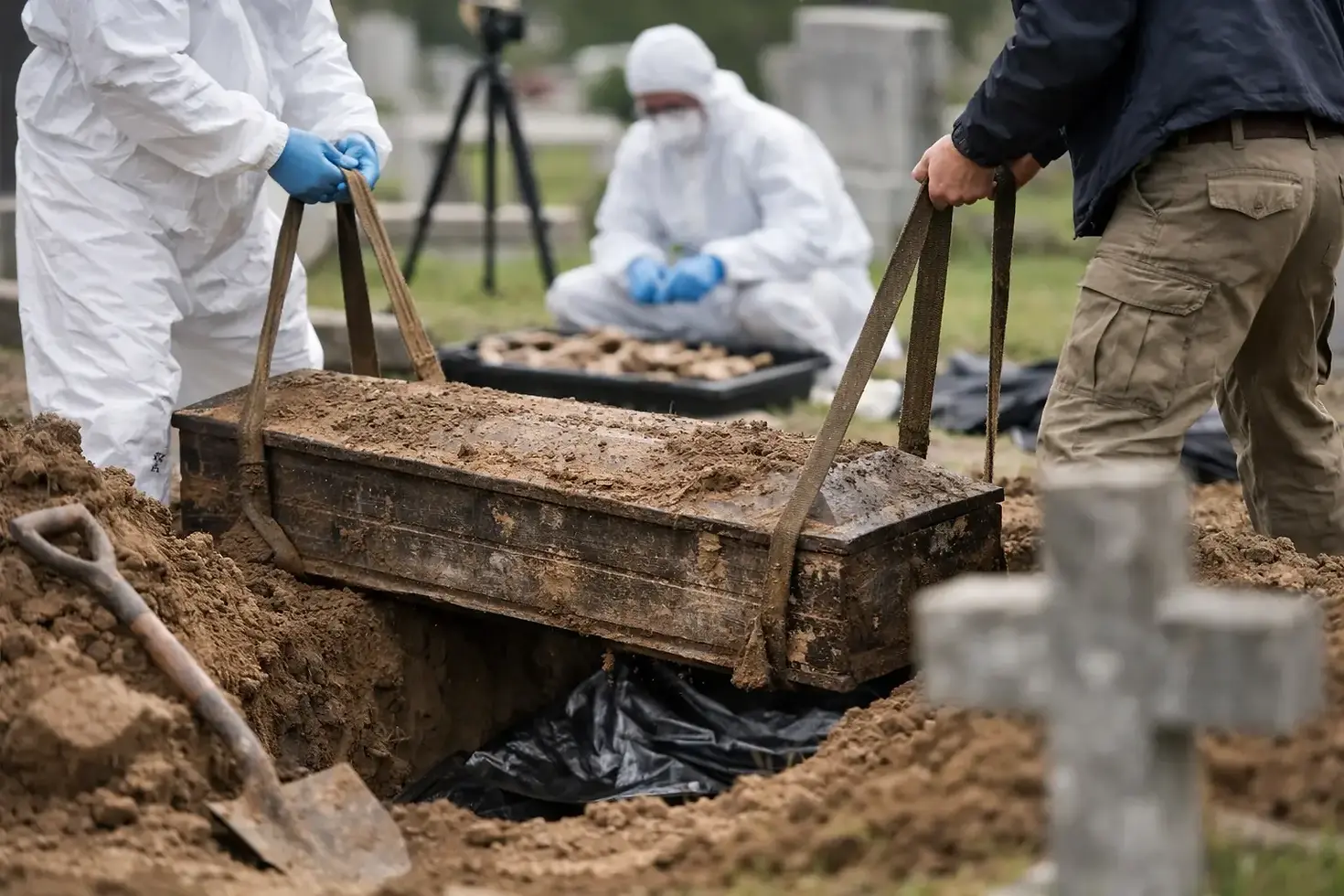
On the scheduled day, the cemetery or appointed team prepares the site and confirms all permissions are in place. Depending on the location, access may be restricted to authorized personnel and selected family members. Some families choose to be present. Others prefer not to attend and instead rely on the service team to oversee everything on their behalf. Either choice is valid.
The grave is then opened carefully. If the burial took place many years ago, the condition of the casket, vault, or burial container may be very different from what families expect. Natural decomposition, soil conditions, moisture, and the passage of time all affect what is found. For this reason, the work is handled methodically and with sensitivity.
Once the remains are reached, they are identified according to records and site information. In some cases, remains may still be within a casket structure. In others, only skeletal remains may remain. The team will collect and transfer the remains into an approved container suitable for transport, cremation, or reburial.
This part of the process is quiet and practical, but it is never treated as routine in an emotional sense. Even when handled efficiently, exhumation should be carried out with dignity and without unnecessary exposure or disturbance.
If the remains are to be cremated
When exhumation is done for cremation, the remains are transported according to local requirements to the appropriate facility. Families may then make decisions about the ashes, including placement in a columbarium niche, keeping the urn at home where permitted, or arranging a memorial service.
For many families, cremation after exhumation offers a way to bring loved ones together in one memorial location. It can also make long-term upkeep simpler, especially when descendants live far apart or cemetery visits have become difficult to maintain.
If the remains are to be reburied
If reburial is the next step, the remains are transported to the new burial site and interred there according to the family’s wishes, faith practices, and the receiving cemetery’s procedures. Some families arrange a short prayer service or blessing. Others prefer a private, quiet transfer.
There is no single right way to mark the moment. What matters is choosing what feels respectful and sustainable for the family.
Emotional considerations families often do not expect
Even when exhumation is necessary, it can stir up grief that has been resting quietly for years. Adult children may feel they are disturbing a parent’s peace. Spouses may worry about making the wrong decision. Siblings may agree on the need for exhumation but disagree on timing, ritual observance, or the final resting place.
These feelings are common. Exhumation is not only a legal or logistical process. It can reopen questions about duty, memory, and family responsibility. That is why clear communication matters. Before proceeding, it helps to discuss why the move is needed, what the intended outcome is, and how any religious or cultural rites will be observed.
Families also benefit from knowing that choosing exhumation does not mean a loved one is being treated with less respect. In many cases, it is the opposite. The decision is often made so the person can be remembered more accessibly, cared for more consistently, or reunited with family in a shared memorial setting.
Religious and cultural practices may shape the process
Faith traditions can influence both timing and ceremony. Some families seek guidance from a monk, pastor, priest, Taoist practitioner, or other spiritual leader before confirming arrangements. Others may want prayers before the grave is opened, after the remains are transferred, or at the new resting place.
This is one of the areas where a standard process does not fully serve every family. What is legally required may be straightforward, but what feels right emotionally and spiritually can differ from one household to another. The practical work must be done properly, yet the surrounding care should also reflect the family’s beliefs.
For families who value a guided approach, support from an experienced memorial team can make a real difference. Providers such as Nirvana Memorial Garden often help families navigate both the operational side and the more personal questions around dignity, ritual, and long-term remembrance.
What families should ask before arranging exhumation
A few questions can bring much-needed clarity. Ask what approvals are needed, who will handle paperwork, whether family members can be present, what condition the remains may be in, what container will be used for transfer, and what the next resting option requires.
It is also wise to ask about timing. Weather, site accessibility, authority approval, and destination arrangements can affect the schedule. Costs should be explained clearly as well, including cemetery fees, labor, transport, containers, prayer services if requested, and any new burial or niche placement charges.
When these details are discussed early, families are less likely to face distressing surprises later.
A process that should be handled with care
When people search for what happens during exhumation, they often hope for a simple answer. The simple answer is that the remains are carefully and lawfully removed, identified, transferred, and placed according to the family’s chosen next step. The fuller answer is that every exhumation carries its own practical realities and emotional weight.
Handled well, exhumation is not a harsh process. It is a careful one. With proper guidance, clear planning, and respect for the family’s beliefs, it can become part of a thoughtful transition rather than another source of distress.
If your family is considering this step, gentle clarity matters more than haste. The right support can help you make decisions with peace, knowing your loved one is being cared for with the dignity they deserve.


Comments